Medal Hunter: Military Game
Ten Square GamesAction
4.6693.00 Reviews
- Version
- 1.10.4
- Installs
- 1.00M
- Age Rating
- Teen
Screenshots
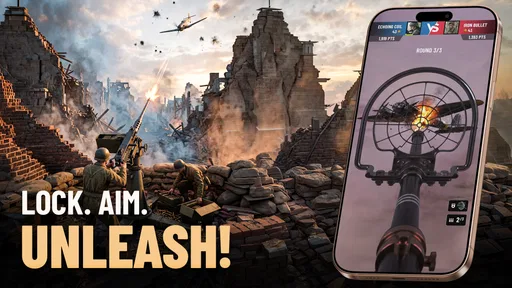
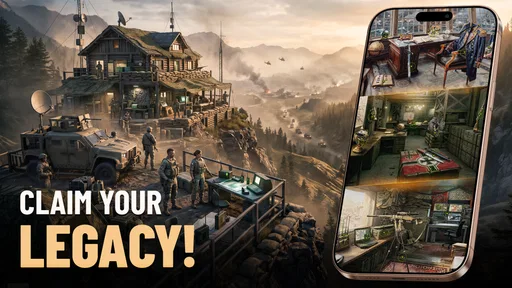
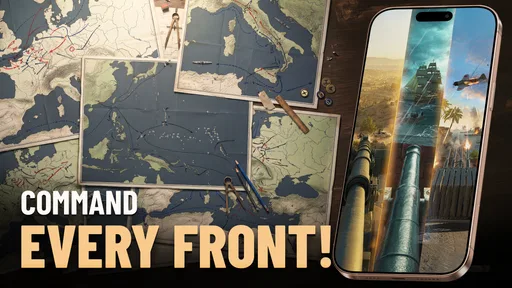
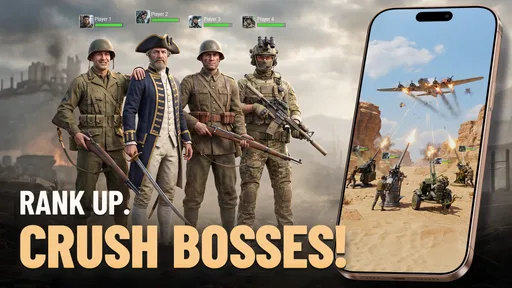
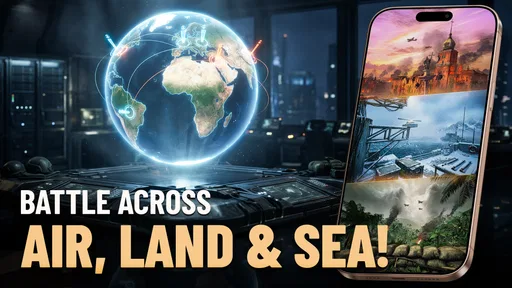
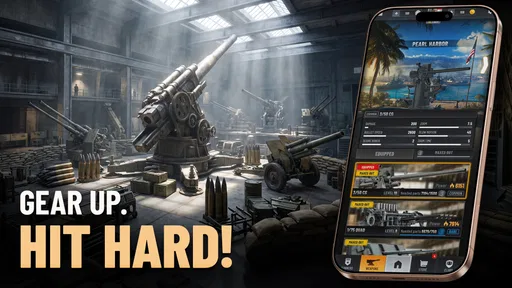
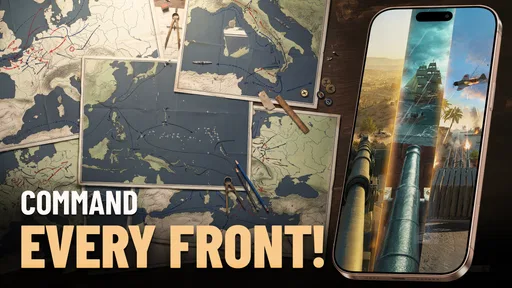
Our Review of Medal Hunter: Military Game
 Analysis by Appyee
I went into Medal Hunter: Military Game expecting a quick sniper title, but its appeal is more focused than that. This is an action game built around player-versus-player shooting: you track a target, settle on the right moment, and try to make one accurate shot before the other player does. That simple loop makes each round easy to understand, while the pressure comes from making a decision with limited time rather than spraying bullets everywhere.
Ten Square Games is behind the game, which is available as a free download for Android users running at least Android 9. It is marked for Teen players, and optional purchases range from $0.99 to $99.99 per item. The current version is 1.10.3, and the game has already passed 500K installs. Its average score sits at 4.6 from around 10K ratings, so there is clearly a sizeable audience willing to return to this particular style of mobile action.
How the current version feels to play
The best way to understand Medal Hunter is to forget the usual image of a fast military shooter for a moment. This is not primarily about rushing through a large battlefield, switching weapons constantly, or trying to survive a long campaign. The core experience is much narrower: identify the target, line up the shot, and fire with enough confidence to beat the opposing player.
I like that focus because it gives every match a readable purpose. When I lose, I can usually think about whether I reacted too slowly, aimed poorly, or committed to a shot that was not worth taking. That sense of responsibility is more satisfying than losing in a chaotic match where several unrelated systems decide the result.
At the same time, the narrow design will not suit everyone. If you want the movement, weapon variety, and constant explosions of a conventional mobile shooter, this may feel restrained. Its tension comes from observation and timing, not from filling the screen with action. Players who enjoy competitive duels and deliberate aiming will get more from it than people looking for a broad military sandbox.
The free entry point is useful for trying the shooting loop without committing money first. However, the presence of in-app purchases means I would approach progression carefully. A free game can be perfectly enjoyable, but competitive players should pay attention to how optional spending affects their sense of advancement. I would recommend playing enough matches to decide whether the basic rhythm is fun before considering any purchase.
The small decisions that matter more than speed
A useful habit is to resist firing the instant a target appears. In a sniper duel, the first visible opportunity is not always the best one. Taking a brief moment to confirm the target and settle the aim can be more valuable than reacting quickly and missing. That sounds obvious, but the pressure of a player-versus-player round makes patience surprisingly difficult.
I also found it helpful to treat every shot as information. A miss should not simply be dismissed as bad luck. I ask whether I rushed, overcorrected, or aimed at a position that was too difficult to read. This mindset turns short matches into practice sessions and makes improvement feel more concrete.
Another practical tip is to play in short blocks rather than forcing a long session. The game’s central action is intense because attention stays fixed on the target. After several tense rounds, impatience can become the real opponent. Stopping for a few minutes after a losing streak helps prevent careless shots and reduces the temptation to spend money just to recover momentum.
Where it fits among mobile action games
Compared with a traditional multiplayer shooter, Medal Hunter offers less variety but a cleaner competitive question. A larger shooter may reward movement, map knowledge, team communication, weapon selection, and fast reactions all at once. Here, the emphasis is much more concentrated on tracking and firing. That makes it easier to pick up during a short break, although it also means the experience can feel repetitive sooner if you need constant novelty.
It also differs from a casual target-practice game because the opponent matters. You are not merely chasing a personal score or hitting stationary objects. The pressure comes from knowing that another player is trying to make the decisive shot too. That competitive layer gives the aiming mechanics more meaning, but it can also make the game less relaxing than an offline practice app.
For someone who normally plays story-driven action games, the main trade-off is content structure. A campaign can provide characters, exploration, and a sense of destination. Medal Hunter instead depends on the quality of repeated encounters. If your enjoyment comes from refining a skill and testing it against other people, that repetition is the point. If you need a strong narrative reason to continue, the format may feel thin.
A realistic everyday use case
I can see this working well during a commute, a lunch break, or a few minutes while waiting for an appointment. The premise is immediately understandable, so I do not need to remember a complicated story or rebuild a large loadout before playing. I can open the game, focus on a handful of tense exchanges, and stop when I have had enough.
That convenience has a downside. A competitive match is not always easy to pause mentally, especially when the outcome depends on a single shot. I would avoid starting a round when I know I may need to put the phone down without warning. This is a better fit for a short uninterrupted window than for situations where notifications, conversations, or travel constantly break concentration.
The Teen content rating is also worth considering for families. It does not automatically make the game unsuitable for every younger player, but parents should treat it as an action title with a more mature presentation than a harmless puzzle game. The free download makes testing straightforward, while purchase controls are sensible if the device is shared.
What the version and release history tell me
The game launched on May 7, 2026, and version 1.10.3 represents its current state. That combination matters because it places the review close to the early life of the product rather than after years of accumulated systems. Players who install now are joining a game that is still establishing its identity, not picking up a long-running title with an enormous backlog of content.
I see that as both an opportunity and a caution. An early version can feel easier to understand because the central idea has not been buried under layers of menus and competing modes. It can also mean that long-term variety and refinement are still developing. I would judge the game mainly by whether its present shooting loop is enjoyable, rather than buying into promises about what it might become.
Version 1.10.3 gives existing users a clear reference point when checking whether their installation is current. Keeping the app updated is especially sensible in a competitive game, since even small adjustments can affect how matches feel. I would not assume that a newer version automatically changes the fundamentals, though. The main question remains whether the current version delivers satisfying target tracking and shot timing for the way you like to play.
What current players should expect from its evolution
Players arriving from the launch period may appreciate the clearer sense of a live product, but they should still expect the basic identity to remain centered on sniper duels. The version number suggests ongoing iteration, yet it does not turn the game into a different genre. If you already enjoy the core loop, updates are a reason to revisit it. If you dislike precision-based competitive shooting, a version change is unlikely to solve that fundamental mismatch.
New users should avoid comparing their first sessions with the polished performance of experienced players. The early learning curve is not only about aiming. It is also about recognizing when to wait, when a shot is worth attempting, and how to stay calm after a miss. I would give the game several focused sessions before deciding whether it is too simple, because the tension becomes easier to appreciate once the basic controls stop demanding all of your attention.
One of the more useful ways to measure progress is to look at decision quality rather than wins alone. A lucky hit can hide a poor choice, while a well-timed shot can fail for reasons outside your control. Thinking in those terms makes the competitive experience less frustrating and gives returning players a practical reason to keep practicing.
The friction points I would not ignore
The biggest limitation is repetition. Because the main appeal comes from doing a small number of things with increasing skill, the game may run out of freshness for players who need frequent changes of scenery. I would choose a broader action game instead if my priority were exploration, a long campaign, or a wide collection of weapons and play styles.
There is also the emotional cost of competitive failure. A missed shot can decide an encounter quickly, and that sharp outcome is part of the attraction. Still, players who prefer forgiving games may find the pressure tiring. The game rewards concentration, but it does not necessarily provide a calm way to play when I am distracted or already frustrated.
The purchase range deserves practical attention too. Since the game is free to start but includes items priced from $0.99 to $99.99, I would not make spending decisions during a losing streak. First establish whether the standard experience is enjoyable, then decide whether an optional item genuinely improves your play rather than merely encouraging another attempt.
Another trade-off is audience size. With more than 500K installs and a strong average rating, the game has enough visibility to attract a substantial player base. That is encouraging for a competitive title, but popularity alone does not guarantee that every region or playing period will feel equally active. I would focus on the quality of the matches I can actually find rather than treating the install count as proof that every session will be busy.
Who should play, and who should skip it
I would recommend Medal Hunter to someone who enjoys mobile action but wants a more concentrated challenge than a full-scale shooter. It is particularly suitable for players who like aiming drills, quick competitive exchanges, and the satisfaction of improving one repeatable skill. It can also work for a friend who wants a free game that is easy to explain: track carefully, make the shot count, and learn from the result.
I would be more cautious about recommending it to someone seeking a story, cooperative teamwork, or a relaxed offline experience. The player-versus-player structure makes the game more engaging for competitive users, but less comfortable for anyone who dislikes pressure from human opponents. I would also steer players who want deep customization toward a larger shooter, where the variety of systems is likely to matter more than precision alone.
For parents, I would treat the Teen rating and optional purchases as practical signals to review the game alongside the child rather than handing it over without discussion. For adults with limited time, the short-match concept is attractive, but only when there is enough uninterrupted attention to aim properly. In other words, it is convenient, not necessarily casual.
What I will watch as the game develops
The most important thing to watch is whether future evolution adds meaningful variety without weakening the clean sniper focus. New content would be valuable if it creates different tactical decisions rather than simply adding more decoration. I would also look for improvements that make competition feel fair and readable, because a precision game depends heavily on trusting the result of each encounter.
I would pay attention to how the balance between free play and purchases develops as well. A free action game can remain welcoming when spending is genuinely optional. It becomes less comfortable when progress starts to feel dependent on payment. Since the current purchase range is broad, careful players should observe how their normal play feels before deciding whether anything is necessary.
Finally, I would watch whether the audience continues to support the central loop. The current rating and install reach show strong early interest, but long-term success will depend on giving skilled players reasons to return without making newcomers feel shut out. The best path would preserve the directness of the duel while offering enough fresh challenges to reward continued practice.
My overall view is positive but specific: Medal Hunter: Military Game is worth trying if the idea of a tense, focused sniper duel sounds more appealing than a sprawling mobile shooter. I appreciate its readable objective, its suitability for short sessions, and the way it makes timing and restraint matter. I would not call it a universal action recommendation, because repetition, competitive pressure, and optional purchases may bother some players. But for the right audience, the current version offers a straightforward test of patience and accuracy, and that focused identity is exactly what makes it stand out.
Verdict
Strengths of Medal Hunter: Military Game
- Quick missions make it easy to play in short sessions.
- Simple controls are accessible for casual players.
- Military-themed challenges offer a clear sense of progression.
- Works well for players who enjoy collecting medals and rewards.
- Lightweight gameplay may suit older or less powerful devices.
Limitations of Medal Hunter: Military Game
- Mission variety may feel limited after extended play.
- Progress can become repetitive once familiar objectives return.
- Some players may find the military theme too basic.
- Long-term replay value may depend heavily on personal goals.
- Frequent reward-focused gameplay may not appeal to strategy fans.
Other Releases by Ten Square Games
View All
Fishing Clash: Sport Simulator
Simulation4.7

Hunting Clash: Sniper Shooting
Simulation4.6

Trophy Hunter - Sniper Game
Simulation4.6
Similar Picks in This Category
View All
Temple Run 2: Endless Escape
Imangi Studios4.1

PUBG MOBILE
Level Infinite4.3

Free Fire: 9th Anniversary
GARENA INTERNATIONAL I4.4

Talking Tom: Hero Dash Run
Outfit7 Limited4.3

slither.io
Lowtech Studios3.9

Sniper 3D:Gun Shooting Games
Wildlife Studios4.6
Frequently Asked Questions
What is Medal Hunter: Military Game about?
Medal Hunter: Military Game is a military-themed action and strategy experience focused on completing missions, overcoming enemy forces, and earning medals for your performance. As you progress, you typically improve your character, equipment, or abilities while facing increasingly difficult challenges. The game is designed for players who enjoy combat objectives, progression systems, and a competitive atmosphere inspired by military operations.
Is Medal Hunter: Military Game suitable for beginners?
Yes, Medal Hunter: Military Game can be suitable for beginners, especially if they are familiar with action or military games. Early missions generally help players understand the controls, objectives, combat mechanics, and upgrade system. However, later stages may require more careful planning and better equipment. New players should take time to learn the interface and use rewards wisely instead of spending resources immediately.
Does Medal Hunter: Military Game require an internet connection?
The connection requirements may depend on the version and features available on your device. Some parts of Medal Hunter: Military Game may work offline, but online access can be necessary for advertisements, cloud synchronization, updates, rankings, events, or other connected features. Before downloading, check the current Google Play or App Store description, particularly if you plan to play while traveling or without reliable mobile data.
Are there in-app purchases or advertisements in Medal Hunter: Military Game?
Medal Hunter: Military Game may include advertising and optional in-app purchases, as is common with free-to-download mobile games. These features can provide additional rewards, remove waiting periods, or help players obtain upgrades more quickly, but they are not always essential for enjoying the main gameplay. Parents should review purchase settings, while all players should check the store listing for the latest pricing information.
What devices are compatible with Medal Hunter: Military Game?
Compatibility depends on the operating system, device model, available storage, and the minimum version supported by the developer. Before installing Medal Hunter: Military Game, verify the requirements shown on the official Google Play or App Store page. A stable connection may also be needed for installation or updates. If your phone has limited memory or older hardware, performance and loading times may be less consistent.
Play our best games!


